 Image 1 of 1
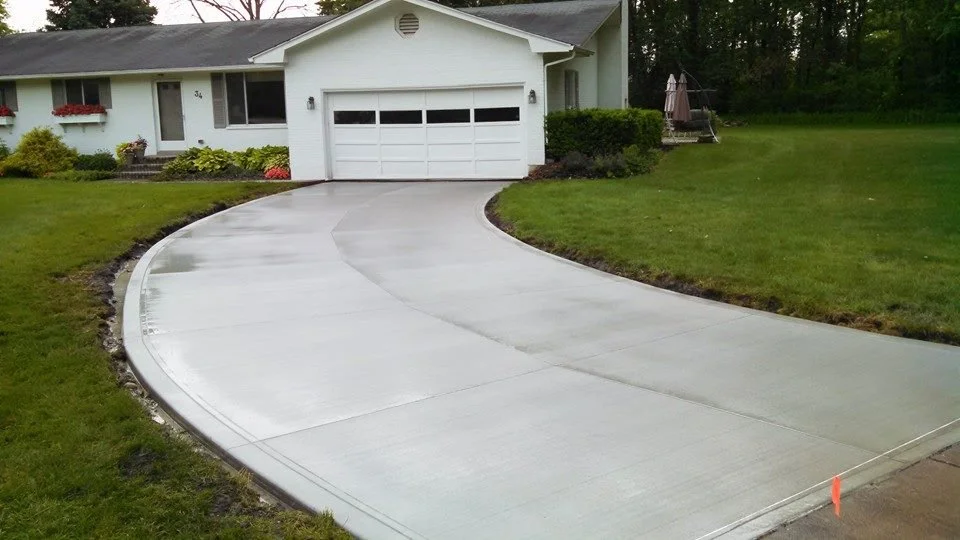
Pouring a concrete driveway for your home is a durable, low-maintenance choice that adds curb appeal and increases property value.
Project overview
Scope: Replace or install a new driveway (residential single-vehicle, double-vehicle, or custom width/length).
Materials: Portland cement concrete mix (commonly 3,000–4,000 psi for driveways), reinforcement (wire mesh or rebar), formwork (lumber), gravel base, expansion joints, curing compound or curing blankets, sealer (optional).
Typical thickness: 4 inches for light passenger vehicles, 5–6 inches recommended for heavier vehicles or trucks and for driveways with poor subgrade.
Site preparation
Permit & codes: Obtain any required local permits and follow municipal codes for slopes, drainage, and setback requirements.
Subgrade: Excavate to the required depth (usually 6–8 inches below finished grade for a standard 4-inch slab
Pouring a concrete driveway for your home is a durable, low-maintenance choice that adds curb appeal and increases property value.
Project overview
Scope: Replace or install a new driveway (residential single-vehicle, double-vehicle, or custom width/length).
Materials: Portland cement concrete mix (commonly 3,000–4,000 psi for driveways), reinforcement (wire mesh or rebar), formwork (lumber), gravel base, expansion joints, curing compound or curing blankets, sealer (optional).
Typical thickness: 4 inches for light passenger vehicles, 5–6 inches recommended for heavier vehicles or trucks and for driveways with poor subgrade.
Site preparation
Permit & codes: Obtain any required local permits and follow municipal codes for slopes, drainage, and setback requirements.
Subgrade: Excavate to the required depth (usually 6–8 inches below finished grade for a standard 4-inch slab